Good content does not rank on its own. Between a well-written post and a strong position in search results sits technical SEO: clean HTML, structured data, correct meta tags, fast load times. This is where many setups fall short. Classic headless approaches in particular, which assemble content in the browser via JavaScript, often hand search engines a half-empty page.
Publino takes a different route. As a headless CMS it separates editing from delivery, yet it serves content so that the technical SEO is right out of the box. Here is what that gets you:
Server-rendered, clean HTML
Publino serves finished, sanitized HTML through its delivery API. You embed it server-side in your site, whether Next.js, Astro, PHP or WordPress. The key difference: the crawler receives the full article in the very first response, not after running JavaScript. No waiting for client rendering, no gaps in the index.
Structured data without manual work
Every article ships with ready-to-use Schema.org JSON-LD, matched to its type (Article, NewsArticle, BlogPosting and more). Headline, dates, author, publisher and image are set correctly. That is the foundation for rich results in Google and spares your editors from hand-building error-prone markup.
Meta tags and canonicals under control
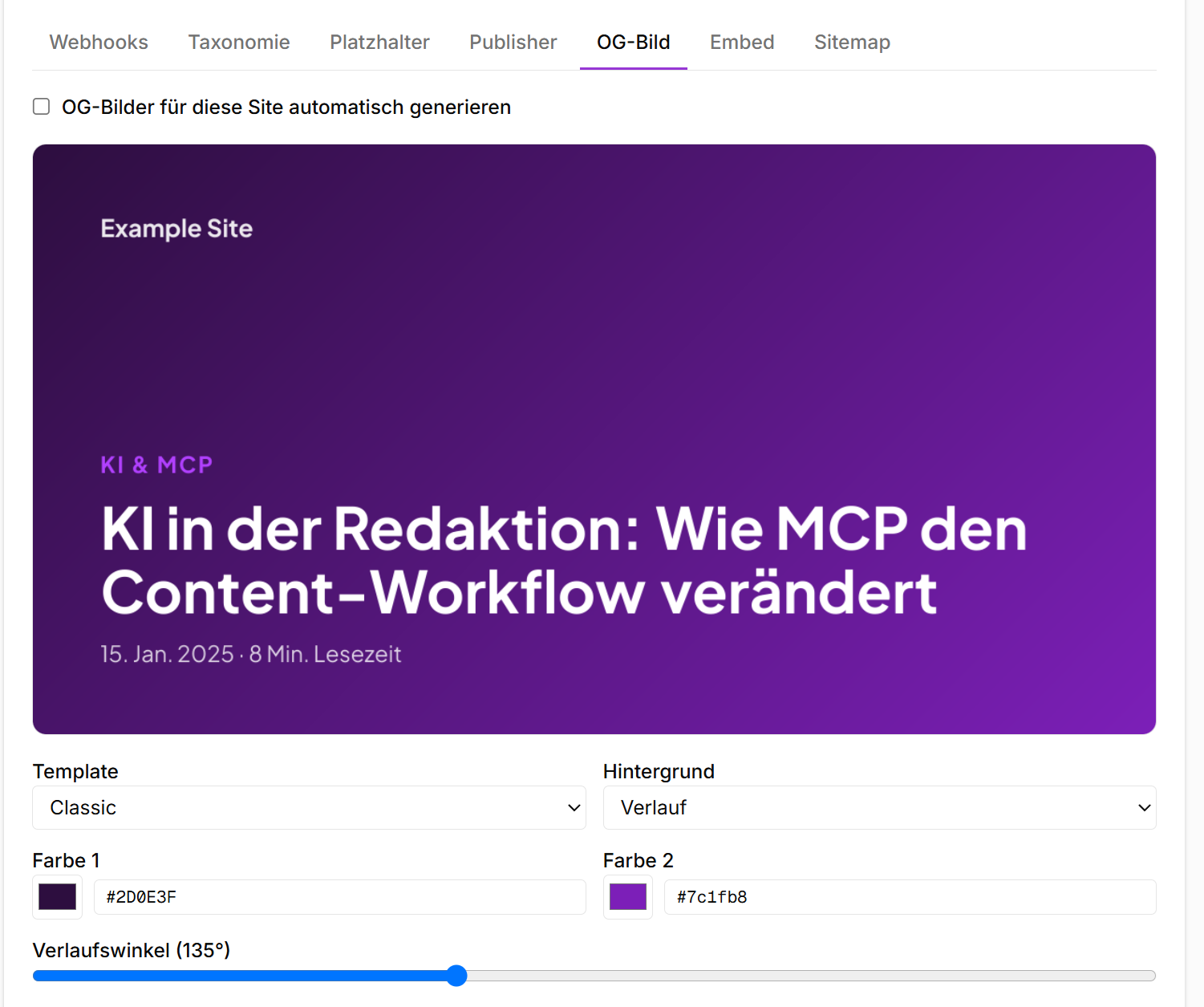
Title, meta description, Open Graph, OG image and the canonical URL are maintained per article in one place. The canonical URL is especially valuable when the same content appears on more than one site: you tell Google unambiguously which version counts and avoid duplicate-content issues.
Multilingual with correct hreflang
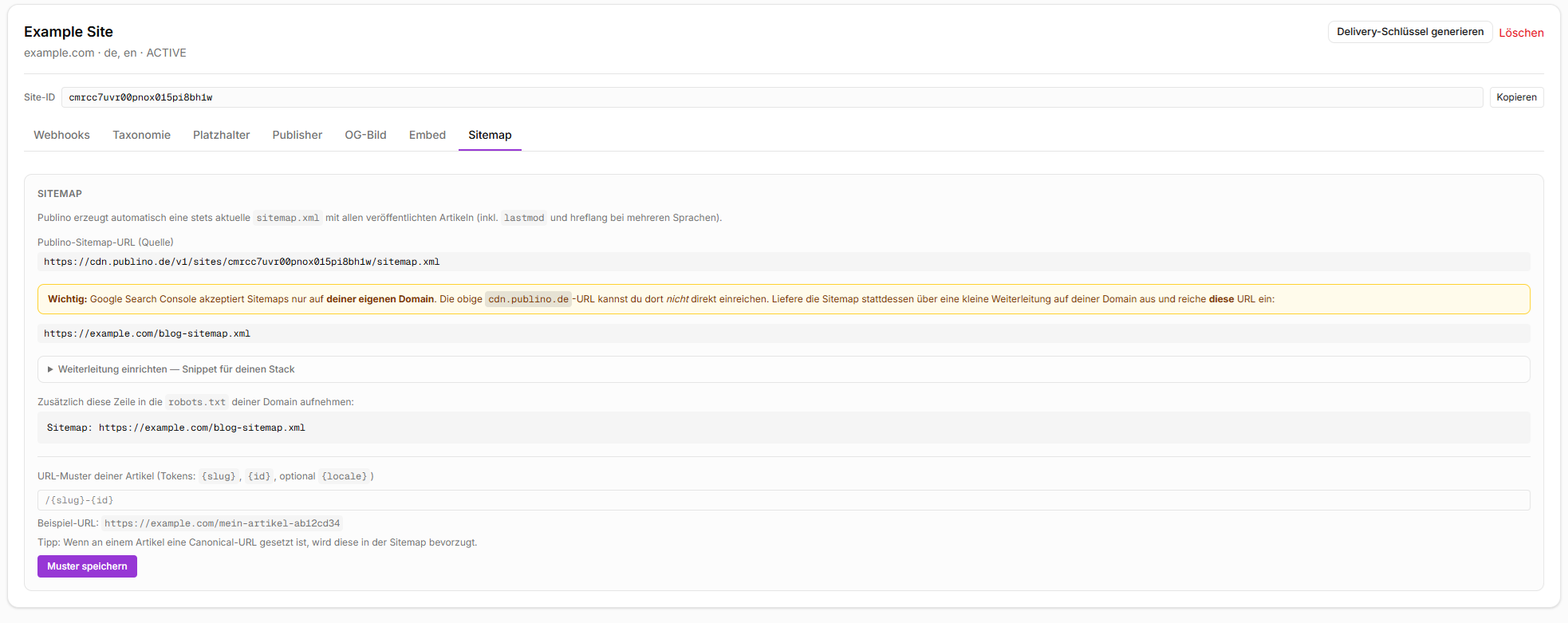
Translations, for example German and English, belong to a single article in Publino. The generated sitemap includes the matching hreflang alternates. Google understands which language version targets which region, without you managing hreflang by hand.
Automatic sitemap
Publino generates sitemap.xml automatically from your published articles, including last-modified dates and hreflang. You serve it under your own domain. That speeds up indexing of new and updated posts and keeps the index clean.
The content lives on your domain
This may be the most important point. Because Publino is headless, articles appear under your domain, not on a third-party CMS subdomain. Every backlink, every ranking signal and all the authority you build accrue to your domain, not a vendor's. You build your own equity.
Speed as a ranking factor
The delivery API responds fast and is cached. Instead of a heavy CMS front end, your pages load lean HTML. Good load times and stable Core Web Vitals are a direct ranking factor and improve the user experience at the same time.
Well-kept content through a clear workflow
Publino has an editorial flow from draft through review to publication, plus scheduled publishing and a freely set publish date. Consistently maintained, up-to-date content is no trick, but over time it strengthens the trust and relevance that Google rewards.
Conclusion
Publino's SEO advantage is not a single trick but the foundation: server-rendered HTML, automatic structured data, clean meta and canonical control, correct hreflang and a ready-made sitemap. All on your own domain and delivered fast. The technical groundwork is right from the start, and your editors can focus on what really matters: good content.